Table of Content
Introduction
What Are Hard Skills?
What Are Soft Skills?
Key Differences between Hard Skills and Soft Skills
Which One Boosts Your Career Faster?
Real-World Industry Examples
Why You Need Both
How to Improve Both Skill Sets
The Future of Skills in the Workplace
Conclusion
Introduction
This is the most important question that every professional, be it a fresher joining the job market or a top-level corporate executive trying to rise through the corporate ladder, has to answer: Which is more crucial for career success: hard or soft skills?
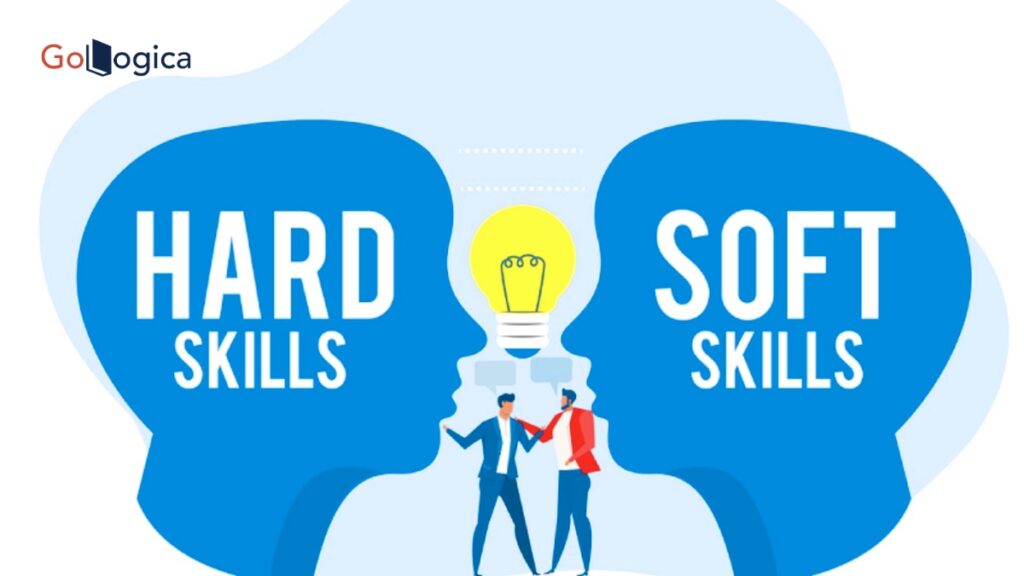
The answer isn’t simple. To get your foot in the door, you need hard skills, or the technical skills that demonstrate your ability to do the job. But soft skills, the people qualities that define the way you relate, how you fit, and how you lead, are what can make or break promotions and leadership positions.
In this paper, we will deconstruct the differences, examine some examples within industries, and determine which skills actually enhance your career more quickly. You will understand by the end why the most intelligent professionals invest in both hard and soft skills to be successful over the long run.
What Are Hard Skills?
Hard skills are technical skills that are teachable, testable, and certifiable. They are task-related and are directly related to your competence.
Examples of Hard Skills
- Technology: Python, Java, C++, cloud computing (AWS, Azure), cybersecurity.
- Business and finance: accounting, data analysis, financial modeling, Excel.
- Marketing: PPC, content strategy, SEO, Google Analytics.
- Healthcare: operation, diagnosis, and medical devices.
- Through engineering: CAD design, structural analysis, robotics.
For example, a cybersecurity analyst may have to be familiar with penetration testing, firewalls, and risk assessment tools to protect systems. They cannot even apply for the position without these hard skills.
What Are Soft Skills?
Soft skills refer to interpersonal, behavioral, and emotional skills, which describe the way you relate with other people, how you conduct yourself, and how you respond to change. They are not quantifiable like hard talents, but they are necessary in almost every job.
Examples of Soft Skills
- Listening and communication.
- Team leadership and management.
- Critical thinking and problem-solving.
- Creativity and innovation
- Emotional intelligence, empathy.
- Flexibility and strength.
- Negotiation and persuasion
Without the ability to persuade and build relationships (soft skill), a sales executive may know CRM tools (hard skill), but will not be able to make deals.
Key Differences between Hard Skills and Soft Skills
| Aspect | Hard Skills | Soft Skills |
| Definition | Technical, measurable abilities | Interpersonal, behavioral qualities |
| Learning | Through courses, training, and certifications | Through experience, practice, and reflection |
| Measurement | Easy to test (exams, certificates, KPIs) | Hard to quantify, observed in behavior |
| Examples | Coding, accounting, cloud computing | Leadership, empathy, and communication |
| Longevity | May become outdated with tech changes | Timeless and transferable |
| Career Impact | Helps you get hired | Helps you grow, lead, and sustain |
Which One Boosts Your Career Faster?
Hard Skills: Career Entry Point.
- Employers screen job applicants using hard skills.
- They demonstrate that you are competent to perform the job.
- And without them, it is scarcely possible to land interviews.
Scenario: No data scientist who does not know machine learning will pass, regardless of how good a leader they are.
Soft Skills Career Accelerator.
- When you are working, they move up, create leaders, and ultimately become successful in the long term using soft skills.
- Communication, flexibility, and teamwork are often valued more than pure technical competence.
Example: Two workers possess an equal degree of coding knowledge one of them can easily communicate ideas and mentor other workers, and the other has collaboration issues. The former will most likely become a team lead in less time.
Lesson: Hard skills will get you a job faster, but soft skills will broaden your career faster.
Real-World Industry Examples
1. IT & Technology
- Hard Skills: AI, DevOps, programming, cybersecurity.
- Soft Skills: Flexibility, problem solving, Teamwork- Soft Skills.
Example: A developer may write ideal code, but without collaborative efforts and problem-solving solving big projects will fail.
2. Healthcare
- Hard Skills: Surgery, diagnostics, and medical research.
- Soft Skills: Communication, empathy, and patience.
Case study: A compassionate nurse who is able to communicate effectively can alleviate patient anxiety, which enhances the overall care.
3. Marketing & Sales
- Hard Skills: analytics, PPC campaigns, SEO.
- Soft Skills: creativity, persuasion, negotiation.
Example: As a marketer, the marketer employs analytics to reach the appropriate group; however, the campaigns are successful through creativity in their message.
4. Finance
- Hard Skills: Financial modeling, compliance, and auditing.
- Soft Skills: decision-making, ethics, leadership.
Sample: A quantitative analyst of financial orientation with a leadership approach will be advanced to managerial positions quickly than the quantitative-oriented analyst.
5. Education
- Hard Skills: Subject matter expertise, curriculum planning.
- Soft Skills: Telling stories, communication, and patience.
Example: A history instructor who tells classes with interesting stories (soft skill) is far more effective than one who recalls dates only.

Why You Need Both
Early Career
- Hard skills dominate—certifications, technical knowledge, and portfolios matter most.
Mid-Career
- Balance is key—soft skills (like leadership and communication) help you manage teams and projects.
Leadership Roles
- Soft skills outweigh hard skills—leaders must inspire, guide, and adapt.
Stat: LinkedIn’s Global Talent Trends report shows 92% of recruiters value soft skills as much as hard skills, and 89% say bad hires usually lack soft skills.
How to Improve Both Skill Sets
Improving Hard Skills
- Obtain professional credentials (AWS, PMP, and CFA).
- Do an online course (GoLogica, Coursera, Udemy).
- Practice real-life work, hacks, and simulations.
- Know the industry trends.
Improving Soft Skills
- Become members of public speaking clubs (Toastmasters).
- Be a good listener during meetings.
- Seek feedback from mentors.
- Read emotional intelligence books and communication books.
- Take small team leadership opportunities.
E.g., When an IT engineer enhances DevOps (hard skill) and works on communication and adaptability (soft skills) they place themselves in positions of leadership.
The Future of Skills in the Workplace
As industries are being transformed by automation and Artificial Intelligence, skills demands are shifting:
- Hard skills change fast (new programming languages, tools, AI systems).
- Soft skills do not age (creativity, adaptability, and leadership).
Examples: These days, a machine learning engineer might know how to use TensorFlow, but flexibility and critical thinking will keep him or her relevant as new tools appear.
Case Studies
Case Study 1: Tech Professional
A junior developer with excellent coding skills (hard) struggled to grow until they developed communication and mentorship (soft), eventually becoming a team lead.
Case Study 2: Healthcare
A doctor with strong technical expertise but poor bedside manners lost patients’ trust. Meanwhile, a colleague with empathy built stronger relationships and career success.
Case Study 3: Corporate Manager
A finance professional moved into a director role not because of stronger spreadsheets, but because of their leadership, ethics, and decision-making.
Conclusion
The modern-day competitive work environment places a value on hard skills and soft skills as essential determinants of success in your career. Hard skills demonstrate your technical competencies and prepare you to work in the job, whereas soft skills demonstrate your teamwork capabilities, leadership skills, and adaptability to various environmental changes.
You should not only rely on one to the exclusion of the other, as doing so may limit your potential to grow. The real benefit lies in finding the right balance – to employ hard-skill acquisition to open up opportunities and soft-skill maintenance and development to continue and develop within those opportunities.
At GoLogica, we appreciate the value of this balance. Our training programs are designed to prepare professionals not only with the current technical skills, but also with the communicative, problem-solving, and leadership skills that are necessary to be at the top. Learning both of them, you have a competitive advantage, a faster career, and long-term success in any industry.