
Table of content
Introduction
Hedging as a Boon
Risk Mitigation
Enhanced Stability
Increased Confidence
Liquidity Improvement
Cost Reduction
Hedging as a Curse
Potential for Increased Losses
Cost of Implementation
Complexity and Time Investment
Not a Guaranteed Profit Generator
Potential for Misuse
Conclusion
Introduction
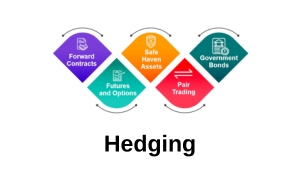
The world of today is ever-changing, laden with uncertainty when it comes to the market of finance. Markets are increasingly falling and gaining at the expense of economic changes, sufficient to have strategic planning in the search to navigate through these unpredictable waters but instead having proactive risk management. The tool that comes in handy here. Its basic level, it is a speculative move in financial planning meant to counter shortages in some types of investments. Either in the form of derivatives such as options and futures or more technical, their aim is always the same: to minimize the risks of facing an unfavourable price fluctuation.
Hedging may provide stability during turbulence by serving as a financial cushion, which enables businesses to plan and have greater confidence in their operations. Nevertheless, as much as it gives the much-needed cushion against the effect of a volatile market, have its disadvantages. It can be rather expensive, require professionalism, and, in case it is performed improperly, lead to resourceless net income or undesired risks. This article is an in-depth exploration of the concept of hedging, its benefits and shortcomings, and practical use. Wewould like to discover whether turns out to be an ultimate blessing or rather a curse and how it affects the choices and performance of different participants in the financial ecosystem.
Learn Oracle Advanced Supply Chain Planning to optimize supply chain operations and improve planning accuracy across your enterprise.
Hedging as a Boon
It can be seen as a good financial instrument through which stability and hope are brought to both business and investment. Hedging hedges against unfavourable fluctuations in the price of currencies, commodities, interest rates or even the stock market by selling or buying financial instruments such as derivatives, futures or options. The strategy is particularly useful in volatile markets where there is a likelihood of high losses due to changes of fortune. Businesses engaged in international trade hedge against risks brought by fluctuations in currency, which may as well turn against their profitability.
On the same note, the producers and the consumers of commodities apply the use in terms of locking up the prices and ensuring a predictable cost structure. To investors, it lets their portfolios be diversified and minimizes exposure to certain risks without the necessity to sell the positions. The other significant strength offered by hedging is that one can make an informed gamble. In case downside risks are reduced, decision-makers can be willing to pursue the growth opportunities without fear.
This is especially relevant in such industries as agriculture, aviation, and energy, where fluctuations in the market are not rare. It does not do away with risk, but it converts risky unpredictability into calculable difficulties, which is a real blessing in the new financial world.
Risk Mitigation
It will be necessary to reduce the possible effects of the unpredictable circumstances on the maintenance of the stasis and the guarantee of the long-term success. In business and finance, it is the process of finding a potential exposure-risk threat, like market risk, business process disruption risk, cybersecurity risk, or regulatory compliance failure, and taking action to mitigate the occurrence of the event and convert the impact to be less significant. Sound planning involves exercising proper risk assessment, preparing contingency plans and applying controls to check and tackle vulnerability.
Companies can vary investments, have insurance coverage, and improve on internal functions or redundancies in case they take over vital functions. training of the employees and good governance, as well as implementation of technology, are also important in enhancing and becoming more efficient in responding positively whenever challenges come by. The companies end up in a better position to recover at a quicker pace and with minimal losses as they deal with threats as they arise. Such a strategic move does not only protect financial and operational well-being, but it also creates trust in the stakeholders. A properly planned organization has a high chance of being flexible to change, having the audacity to explore opportunities, and actualizing its goals amid the uncertainties.
Build your skills in digital marketing and customer engagement with Adobe Marketing Cloud Training, designed for real-world application.
Enhanced Stability
An effective financial base enables companies to adjust to the vagaries of the market and economies with a lot of assurance. Organizations that have proper fiscal policies, adequate liquidity, and a proactive risk management process have a better response to unforeseen situations. This will result in a steady cash flow, an increase in investor confidence, and a good credit ranking, thereby promoting the long-term viability of the company. Any company that constantly analyses its economic policies, grasps market trends, and responds to the dynamic environment in a timely way is less likely to face disruptions.
This encompasses a proper amount of reserves, various sources of revenue, and manageable debt. Also, efficient operations and approved budgets increase the predictability of the financial performance. Whenever there is economic pressure, such businesses are able to act calmly instead of in a knee-jerk reaction manner. Stability and confidence in stakeholders come through internal controls, financial vision, and durable business ideas. This general financial strength does not just aid in short-term goals but also enables the organization to be able to invest in the future in terms of innovation, expansion, and opportunity.
Increased Confidence
Keeping uncertainties proactively enables individuals and organizations to make sense of the turbulent environment, feel confident in their power to act, and achieve a sense of control. Teams are able to work out strong contingency plans that cater less to interruption and establish continuity by foreseeing the challenges before they strike. Such preparedness does not only eliminate fear of the unknown, but it also develops a strong mindset that accepts change instead of fighting it.
Such foresight can be used to make smarter, quicker, and more rational decisions in lightning-quick industries such as the financial sector, healthcare, technology, and the supply chain. It enables leaders to make use of opportunities that others would not realize since they are not caught up in reactive thinking. Defined plans on how to deal with failures lead to the establishment of the culture of meeting setbacks and being agile and accountable to risk-taking. In its turn, this increases the level of trust between stakeholders, enhances cooperation, and encourages innovation. It makes employees feel safer and inspired, as there is a program to deal with uncertainty. Finally, this may lead to sustainable growth, a competitive edge, and operational steps in the future.
Learn Workday Finance Training to effectively manage financial processes and gain hands-on expertise in cloud-based financial management systems
Liquidity Improvement
The key aspect of having smooth financial processes is how an organization takes care of its short-term commitments so that in the process it incurs no strain on its finances. To a large part, this dependability is aided by the availability of liquid assets or cash, or resources that can be quickly transformed into cash.Improving the forecast of the cash flow, reducing the time of collecting payables, and leveraging the terms with the suppliers to collect more payables quickly are the key solutions. Abiding by a desirable level of your current assets and current liabilities plays a significant role when maintaining liquidity.
Companies may also refinance outstanding debt, reduce non-operating expenses, or sell non-core assets to free locked-up finance. The higher the ratings in the financial market, strategic reserves, and a balanced portfolio, the easier assets may be liquidated when necessary. Enhancement of liquidity not only gives security in operations as operations are done on a daily basis but also acts as a financial buffer whenever volatility or downturns occur. In the end, effective management of liquidity creates stability and organizational resilience in operations in the long term.
Cost Reduction
One goal of the businesses in enhancing profitability and efficiency is trying to reduce operational costs. There are different ways through which this can be accomplished; they include simplification of operations, mechanization of tedious activities, renegotiating supplier agreements, and the deployment of a technology that improves productivity. Organizations are also preoccupied with the removal of waste, maximization of resources and outsourcing of non-core activities in order to save costs without affecting quality. Intelligent control of expenses not only in the long term increases financial well-being but also frees up funds to invest in innovations and growth. These attempts prove to result in long-term savings and a better position within the market when implemented diligently.
Gain in-demand skills in real-time data processing and log analysis with comprehensive ELK Stack Training, essential for modern IT operations.
Hedging as a Curse
Although hedging is usually used as a defensive measure, it is sometimes a double-edged sword, particularly when ill-used or misunderstood. Among the main disadvantages is the expense; the procedure involves the investment in such financial instruments as options or futures, which may decrease total profits in case the supposed risk never occurs.
Also, the excessive usage of hedging can make investors or businesses complacent by not listening to the signals of the greater market and then acting based on unsafe choices driven by the illusion of being secure. Complex strategies may not always work but, in fact, underscore the risks rather than the other. This is especially so when there is speculative trading as opposed to risk management with the derivatives. In addition, untimely decisions or wrong guesses could lose one his or her money, which is the opposite of the hedging essence. To businesses, it can also make transparency, as well as its reporting, complicated.
This way, it it is quite a good protection, but when it is used improperly or is improperly understood, it can be much more of a millstone than an asset, as it would turn into a potential curse instead of the safeguard.
Equip yourself with foundational AI knowledge through AI Essentials for Business Training, tailored to enhance strategic decision-making and innovation in business.
Potential for Increased Losses
In some financial plans especially where sophisticated instruments are designed, especially where one uses a complicated instrument such as derivative or leverage, there is always a chance of an unpleasant outcome where losses overshadow expectations. Although these tools are frequently applied to help control risks or improve profits, misinformed assumptions, unfortunate timing, or a drastic market change can hurt them instead.
To give an example, a hedge that was implemented to prevent a decrease in prices may incur heavy losses when the market drifts in the opposite direction or stabilizes in a manner that was not expected. Moreover, the urge to rely on predictive models too much or, on the contrary, fail to make adjustments in real time might proportionately increase risk instead of reducing it.
Even such strategies, which are aimed at reducing the degree of financial exposure and made with the best intentions, cannot help but cause a further increase in the scope of financial exposure when poorly monitored and implemented. This is more so in the case of a volatile or unpredictable setting whereby conditions change very fast. To achieve this, the organization should use good risk management, periodically evaluate their plans, and be ready to face the worst-case scenario in order to have no unforeseen losses.
Gain deep expertise in designing scalable CRM solutions with the Masters in Salesforce Architect Course, tailored for aspiring Salesforce architecture professionals.
Cost of Implementation
Integrating new systems, technologies, or processes in a business can be an ingredient that consumes a lot of investment regarding money, time, and resources. Originally, this stage is called a cost of implementation, and it comprises a number of elements that involve buying software or hardware, licensing costs, customization, employee training, consulting, and support. Other than actual financial expenses, institutions can also incur indirect expenses such as lost time during the transition, loss of productivity, or temporary workflow freeze.
Effective strategies in ensuring such costs are planned properly and their risks are assessed. The underestimation of the overall cost may cause any increase in cost, slow ROI, and reluctance of stakeholders. Nevertheless, these initial investments tend to pay off considerably in the long run, becoming more efficient, accurate, and scalable when viewed as a strategic project. Selection of scalable and flexible solutions, vendor contract negotiation tactics, and early involvement of key stakeholders in planning are ways that can curtail unwarranted expenditure. An effective implementation plan is, however, more than a less expensive implementation plan; it is one that smooths the process and enables a more rapid value realization.
Complexity and Time Investment
Dealing with investing strategies, and particularly such based on risk reduction and portfolios protection, may require hard work and dedication. Financial instruments like options, derivatives, and futures are very complex, and hence their understanding will necessitate extensive knowledge.
These instruments, which are useful, are accompanied by elaborate contracts, legalities, and dynamics in the market that are not easily easy to understand. Introduction of such strategies also warrant monitoring, market research and correction to ensure that it keeps up with the changing economic tides. It implies that individuals or organizations would have to take serious time for research, training, and execution in order to achieve desired results.
This learning curve might be very high, especially when the person faced with complex financial planning or investment hedging is a novice. In addition, unexpected losses can also come about as a result of mismanagement, either because of the lack of expertise or rushed management decision-making. Although, when properly handled, the benefits may be very high, taking into consideration the time, effort and regard to detail required, it is essential to cost-benefit it against projected protection and benefits to gain.
Enhance productivity and achieve goals efficiently with Time Management Training, designed to help you prioritize tasks and manage time effectively.

Not a Guaranteed Profit Generator
Although hedging is an effective financial tool employed to perform a risk management process, it does not guarantee profit. The main aim of hedging is to cover any loss that may occur but not to make profits. The expense of establishing a hedge, like buying options or entering into futures contracts, in most cases lowers the total returns, especially in the event that the event insured against occurs.
This results in cases of a company or an investor wasting money on risk management tools without realizing a financial reward. More so, failure to interpret the trends in the market or employ the wrong tools might result in loss of opportunities or incurring unwanted losses. It is also worth realizing that it can also be complicated in terms of strategy that needs expertise, and failure to do it properly may also affect profitability.
This is why, despite being a safety net, it is prone to being used with more or less specific goals having been analyzed. This is an efficient technique of not profit maximization but stability and protection; hence, it is a strategic decision and not a profit-making method.
Potential for Misuse
Financial strategies, when applied without checks in place, may at times bring about unintended effects, especially when such strategies as hedging are not applied with utmost transparency and knowledge. Although minimizing risk is their intended purpose, these instruments can be used like a cloak of invisibility to conceal real financial situations or speculation by using protection as an excuse. By way of example, over-hedging or profit-seeking as opposed to hedging by means of a derivative may prove extremely costly to an organization. Decision-makers in certain situations might overuse these strategies without taking into account relevant risks or intricacies, implying that these are just strategies and the risk is still present.
Not only will the financial health of the organization be injured, but also stakeholders with whom the organization does business will lose trust in it due to the lack of oversight, misreporting giving a false picture, or any failure in internal controls. When used irresponsibly, a protection is what can become a liability and result in regulatory or reputational injury. Hence, there should be proper governance, professional expertise and strategic purpose in implementing and other schemes in order to avoid misapplication and have an ethical financial practice.
Conclusion
Hedging is an important yet arguable financial tool. On the one hand, it acts like a protective barrier through which investors, businesses and institutions could cushion against trends which are unpredictable in the market. It will enable the making of decisions and plans with more assurances since risks involved in fluctuating prices will be minimized. Conversely, when not used with adequate knowledge and understanding, it may result in overdependence, low profits or rather serious loss. Abuse or over hedging may give a false financial impression and foster laxity in risk rating. Thus, whether hedging is efficient or not depends not on the strategy but on the competence of the person who will implement it.
Here the professional training comes in handy. In GoLogica, we prepare individuals with the knowledge and practice they need in the industry regarding the financial knowledge regarding risks, ways and means of monitoring risk management. Our training taught by experts will give you valuable tools and user-friendly strategies so that you can make your conscious financial decision, not your gamble. Utilize GoLogica and ensure that all your strategies are effective.