Introduction to UX Design Expertise
Core Skills for UX Design Experts
User Research and Data-Driven Decision Making
Empathy and User-Centered Design
Wireframing, Prototyping, and Interaction Design
Visual Communication and UI Design
UX Writing and Microcopy
Advanced and Emerging Skills
AI Literacy and Responsible Design
Voice and Conversational UI Design
Extended Reality (AR/VR) Design
Design Systems and Scalable Design
Accessibility and Inclusive Design
Soft Skills and Mindset
Critical Thinking and Problem Solving
Curiosity and Continuous Learning
Collaboration and Communication
How to Build and Develop These Skills
Self-Study and Online Learning
Hands-On Practice and Portfolio Building
Networking and Mentorship
Real-World Experience
Measuring Progress and Achieving Expert Status
Conclusion
Introduction to UX Design Expertise
Being a UX design professional goes beyond the process of learning how to use tools or chase trends, it involves adoption of a way of thinking that puts the user in the centre of decision-making. UX design professionals are customer advocates, representing a consumer need and discomfort during the design process and negotiating a business strategy and stakeholder expectations. They operate on the principles of empathy, research, and strong knowledge of the ways how humans relate to products, services, and systems. In comparison with UI designers, who primarily aim at the visual appeal, the UX experts centralize their concern on the user path, making sure that each of the interactions is rational, smooth, and goal-oriented.
The future of UX design will have changed a lot in 2025. With the transformation of the production and testing of products remodeled by artificial intelligence and automation, UX designers are demanded to evolve their knowledge, a broader and more strategic knowledge ultimately moving away from the adoption of technical toolkits. Even as Artificial Intelligence automates the process of Wireframing and prototyping, research, and user research in particular, is a perfect example of a domain where a human mind and its empathy are irreplaceable. Professional designers need to remain flexible and keep themselves up to date of new technology like voice interface, augmented and virtual reality and the ethics of AI-assisted designing.
UX Design
Existing and novice UX design practitioners will also have to develop a balance of new emerging skills AI literacy and responsible design, coupled with core competencies, including user research, prototyping, and problem-solving to excel as a UX design expert in 2025. The future-based scene requires more than just expertise; the level of communication, cooperation and a duty to provide meaningful, widely available experiences to all users is required as well. The journey to mastery is a continuous one involving wonder and persistence and a desire to keep learning throughout the entire life.
Basic Knowledge and Skills of UX Design Experts
Examples of core UX design skills are user research and data-driven decision making, empathy and user advocacy, wireframing and prototyping, visual and interaction design, and UX writing. Also, the knowledge of design systems, literacy in AI, and conversation UI design increasingly becomes important. A good teamwork, critical reasoning, flexibility, and continuous education complete the set of essentials that will allow experts to design seamless, inclusive, and innovative experiences of using, in the context of changing digital environments.
User Research and Evidence based decisions:
UX design experts rely on user research and data-driven decision making, thus building products on the basis of what real users actually need and do. User interviews, surveys and usability testing can be utilized so that both qualitative and quantitative data are collected, which will help the designers to find out the pain points, their preferences, and areas about which they have issues of usability. Individual interviews of the users can give in-depth insights into motivations and frustrations, whereas the surveys can give them in a broad and statistically significant form. In the meantime, usability examining finds out the approach that users take to arrangements in grave situations.
Designers can use analytics to monitor the user behavior- e.g. behavioral metrics and digital feedback- in order to establish trends and patterns that will be used to improve the designs. When these two approaches are combined they would lead to appreciating the whole picture of the user experience that would enable teams to make good user-based decisions in the whole cycle of product development. Such practice will not only increase the quality of a product, but the business will grow as well since solutions will actually suit the users. Transferring to continuous feedback loops and involving the use of AI-driven tools further simplifies the research process, and data-driven design decisions become more efficient and effective.
User Centered Design and Empathy
The key to successful UX is empathy and user-oriented design whose proponents strive to solve user problems, form meaningful experiences based on their needs, motivations, and pain-points. It is more than functional as it takes into account emotional factors like delight and frustration and demands a designer to put himself in the shoes of the user. To develop empathy, it is important to conduct a clear research; say in the form of interviews, surveys, and observations on what the users do, but also how they feel and what motivates them in doing so.
Listening plays an important role and helps designers to pick small details and the unspoken needs that may not be outlined openly. The empathy mapping and ideation of persona assist teams in visualizing the experience of users and keeping their needs on display throughout the design life cycle. Designers can create solutions that are well-honed, user-feedback-driven, and highly intuitive by promoting a culture of openness and communication, and it is the key to ensuring a smooth ride and tracking the user experience. Finally, a more empathetic user experience means increased satisfaction and better connection between the user and the experience.
Wireframing, Prototyping and Interaction Design
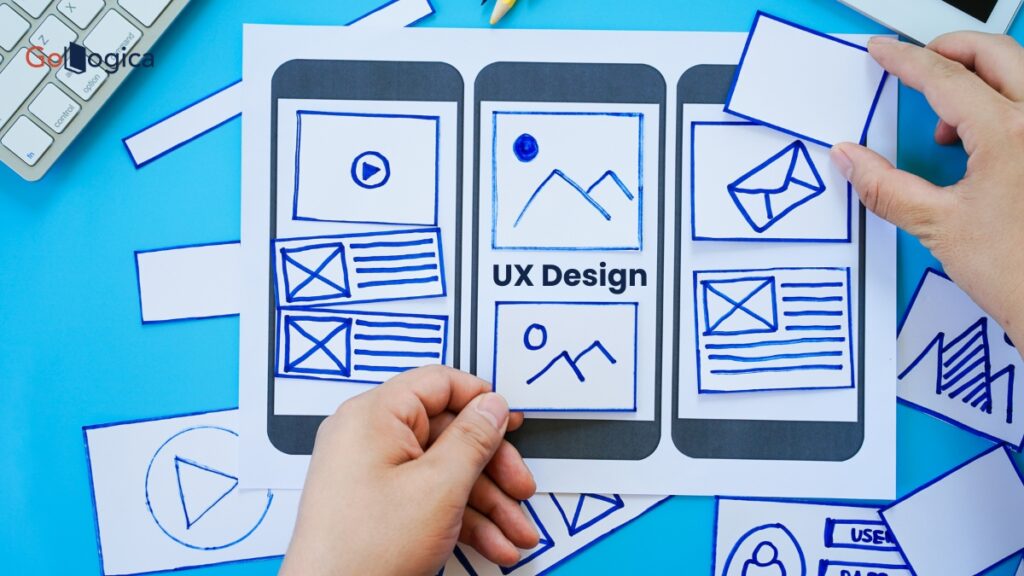
The processes of wireframing, prototyping, and interaction design are some of the critical steps toward the design of intuitive, user-friendly digital products. Wireframes work as blueprints, presenting the framework and layout foundation, and low-fidelity prototypes create the possibility to validate the ideas and early feedback. When ideas are ready, it is necessary to provide high-fidelity prototypes with realistic visuals, animations, and interactions, closely resembling the final user experience. The progression will allow the designers to spot usability problems, improve the navigation and make sure the product meets the needs of the user by the time the development takes place.
Designers can develop and refine prototypes, which include clickable components and transition, using such modern tools as Figma, Adobe XD, and Framer and being able to do it quickly and efficiently. Best practices include prioritizing user feedback through regular testing, maintaining clear communication with stakeholders, and focusing on accessibility and responsive design. Prototyping enables teams to detect and resolve problems early, reducing costly revisions and ensuring a seamless, engaging experience for users. Ultimately, these practices empower designers to deliver innovative, user-centered solutions that stand out in today’s digital landscape.
Visual Communication and UI Design
Visual communication and UI design play a significant role in the development of an interface that is both user-friendly and interesting to look at. The main multiplexes in this process are color theory, typograhy and principles of visual hierarchy. Visual hierarchy determines what the users would look at first, the key elements on the screen and the order and content of the information is shown in a sensible logical way. The choice of typography fonts, size, and spacing can be used to make reading more comfortable and give the interface a certain tone, whereas the color theory can be used as a tool to make the user feel something, to show them what to do, and create an effective interface.
Based on these principles, designers develop relatively good-looking interfaces that look fabulous, functional, and accessible. Words are direct and actions are desirable with easy-to-navigate pages and repeated visual vocabulary, so a user can reach a target without any confusion. Making use of the grids in order to align, not using too many colors to avoid confusion, and having enough contrast that allows readability will be the best practices. Integrated user-minded research and careful visual design can help designers create experiences that not only please the user but also helps build brand identity.
Sooner or later, the skills of visual communication and UI design should allow professionals to stage beautiful and effective interfaces, which promote user satisfaction and engagement in the digital-first environment adopted relatively recently.
UX Writing and Microcopy
UX writing and microcopy are critical in making users successful because they give concise and constructive text in the interface. Clear microcopy, including the text on buttons, the text of error messages and tooltips, helps to make sense of actions, minimize confusions and provides the users with the sense of trust. Good UX writing considers questions that will arise in the mind of the user and will answer them before they do, making a good browsing experience satisfying and easy. The target is to apply simple words so that they fit the tone of the brand hence making each and every word count. Through clarity and empathy, UX writers can allow the development of intuitive, understandable and delightful experiences to every user.
Advanced and Emerging Skills
Advanced and emerging skills in UX design now include AI literacy, voice and conversational UI design, and extended reality (AR/VR) design. It is also important to perceive the implication of ethics, accessibility, and accessible design. It is the control over these areas that takes UX experts to the edge of innovation, so designing more personified and immersive and responsible experiences in digital means of users of all types becomes a possibility.
AI Literacy and Responsible Design
The UX design professionals working in the contemporary technologically driven world need high literacy in AI. It is concerned with the way AI-based tools propose improved user research, modeling and prototyping as well as personalization, and how both the advantages and biases of these tools can be identified. Responsible design involves the critical analysis of the AI product and its results, which guarantee the accuracy, equity, and openness of each contact.
The most important issue is ethical: designers will have to resolve questions such as the privacy of data, systemic biases, or the social consequences of using automated conclusions. With increased AI literacy, however, the UX and similar professionals can use the benefits of these tools to build more inclusive and user-based experiences without violating moral principles. This equilibrium gives designers the courage to be novel, to be innovative and to be accountable, to provide solutions that are useful to both the user and to society.
Voice and Conversational UI Design
Voice and conversation UI development focuses on natural human-like behavior in the interface, and conversation UIs were very successful with chatbots. It starts with a profound knowledge of context and needs of users so that the conversations capture a natural flow and orientation. Designers should make interactions simple, so that users do not have to do too much to reach their destinations as easily as possible, by using efficient and concise hints, using understandable words.
Feedback should be immediate and clear, which means that users will be aware at all times of the status and actions of the system. The error management must be elegant, giving the users directions without losing their temper. Everyone is prioritized since voice interfaces enable people with varying abilities to access the digital experience. Privacy and data security are also hurdles that are to be overcome and this will be achieved by adopting transparent practices.
Extended Reality (AR/VR) Design
Extended Reality (AR/VR) design is about crafting immersive experiences that seamlessly blend digital content with the physical world or transport users into entirely virtual environments. In contrast to the conventional ones, XR determines the interaction based on spatial awareness, 3D-interaction, and natural input techniques, including gestures, gaze, and voice, to design an original, compelling user experience. The real world setting, physical locomotion/body position and physical comfort of the user should be taken into account by the designer to prevent disorientation or motion sickness, and virtual objects, details and surroundings should be placed where the user expects and in proper size to generate a sense of presence and reality.
Storyboarding and space design is a key to the process as it allows moving through the 360 degrees fields and using the virtual objects similarly to the real ones. The accessibility is also helped by high-quality visuals, spatial audio, and ease-of-use interfaces. Security XR designers can design powerful individual experiences by integrating ideas in architecture, interaction design, and user experience that redefine the limit of digital engagement and present fresh potentials in pedagogy, recreation, and commerce.
Design Systems and Scalable Design
Design systems are shared repositories of components, patterns and guidelines whose aim is to empower teams to make digital products consistent and more efficiently using reusable elements. Organizations are able to streamline design decisions, documentation, and get rid of redundancy, speed up development and have a coherent brand experience on all touch points by standardizing their design decisions and documentation.
Due to the fact that teams can change and grow products with ease, scalable design is attained as changes and improvements spread swiftly through the ecosystem immediately. The methodology will promote fluent cooperation between designers and developers, fasten the onboarding process, and guarantee quality, accessible experiences to users on all scales.
Accessibility and Inclusive Design
Accessibility and inclusive design are measures that make sure that all types of people, including those with disabilities, can use a digital product. It means adhering to the principles of universal design, i.e., to make interfaces fit a wide range of needs and preferences by adhering to the principles of universal design i.e. by being equitable in use, flexible, and having perceptible information. Important among them is the need to include text alternatives to images, make use of keyboard usage, adequate contrast of colors and the need to have clear and consistent layouts. Inclusive design is not about being compliant but putting the disabled users into the research and testing phases to develop experiences that will empower everyone. Through accessibility, designers enhance equity, expand outreach and present products and solutions that cater to all people in a real sense.
Soft Skills and Mindset
The UX design professionals also rely on soft skills and a mindset as the way they interact, cooperate, and resolve issues. Empathy helps designers to learn about the needs of users, and critical thinking to analyze and solve rather complicated problems. There exists excellent coordination and interaction that brings teamwork between stakeholders and cross-functional collaborations. Continuous learning and innovation have fed out of curiosity and adaptability, which make designers stay ahead in an ever-changing profession and provide effectual user-centered experiences.
Critical Thinking and Problem Solving
The UX design is all about critical thinking and problem solving, which allows professionals to examine user adversities and to develop satisfactory solutions. Designers are supposed to challenge assumptions, deconstruct complicated problems and apply objective arguments to determine the main cause- not surface symptoms. They use the methods applied to empathize with users, such as design thinking, identifying the tough problems, come up with innovative ideas, prototype, and keep looping on the basis of feedback. Such user-centric and structured approach guarantees innovative yet viable solutions which respond to actual needs and enhance user experience, in general. Problem thinking becomes opportunity of meaningful design with the help of critical thinking.
Curiosity and Continuous Learning
The world of UX design is fast paced and highly competitive today, which requires a designer to be curious about everything and to learn new things every day. Communicating with industry trends, available technologies and changing user requirements guarantees that the designs you come up with are updated and meaningful. Get online courses, workshops, and community events to learn additional information and improve your competence. Study attentively peers, case studies and new tools, etc. In doing so, not only will innovation be fed, but will establish you as a pertinent force in the profession. In the end, lifelong learning will make you be able to generate instinctive and innovative experiences that support the future needs of the user.
Collaboration and Communication
Teamwork and communication are also essential as UX designers should collaborate harmoniously with the members of cross-functional team to produce winning products: developers, marketing professionals, and business leaders. Effective communication requires that design decisions should be explained well, active listening strives to responses, and everyone should know project purposes and project status. Teamwork under the conditions when a designer is open to different points of views, feedback and can adapt the offered solutions to business and customer needs. At a time when disciplines tend to separate and realign around different but equally compelling focuses, UX professionals have an opportunity to harmonize efforts and bring more unity and user-centered output into the work across all stakeholders. This can be achieved by creating a certain level of dialogue and mutual respect, using these elements to align initiatives and build more holistic results.

How to Build and Develop These Skills
To build and develop UX design skills, engage in hands-on practice by working on real projects and building a diverse portfolio. Seek feedback, read industry articles, and take online courses to stay current. Network with peers, attend workshops, and embrace continuous learning to refine both technical abilities and essential soft skills like empathy and communication.
Self-Study and Online Learning
There are potent methods to develop UX design skills through, self-study, and online learning. Using reliable sources, The Design of Everyday Things by Don Norman and Universal Principles of Design, can be considered as the starting point. Subscribe to the most popular blogs like UX Collective or Nielsen Norman Group to learn more about the industry, as well as follow some podcasts, such as UX Podcast or Design Matters to keep a track of trends.
The YouTube channel @gologicatechnologies or The Future has useful tutorials and job-hunting tips; GoLogica, Skillshare and others offer progressive paid courses depending on the level of skills. GoLogica presents fundamental ideas and boo camps where people can pay and learn in detail focusing on project work. The interaction with these materials contributes to ever-growing improvement and enables you to create a powerful UX stock of skills and remain one of the first to meet the changing environment of the digital world.
Hands-On Practice and Portfolio Building
UX designers need to practice and portfolio building, which is necessary to prove the ability to solve real-life problems and master the process. You can turn your hand to existing products to design, deconstruct and reconstruct user experiences, and you can use personal projects to highlight your resourcefulness and creativity. Competition among designers induces time pressure and helps you solve various challenges. Every project must be logged as a specific case study, with your involvement, approach and results being pointed out. This strategy will make your portfolio stronger, and it will also prepare you to meet the industry requirements, which will make you more competitive and a holistic UX practitioner.
Networking and Mentorship
It is essential to have networking and a mentor to make any progress in UX design. Attending UX communities including Interaction Design Foundation, UXPA, and Designer Hangout gives you an access to colleagues, the trend in the industry, and available vacancies. There are learning and collaboration in attending events and webinars. Mentorship will also offer tailor-fit solutions, and fasten the acquisition of skills and the process of career navigation. These activities can create a solid professional network and facilitate the ongoing development in the active sphere of UX design.
Real-World Experience
Real-world experience—through internships, freelance work, and volunteer projects—provides hands-on exposure to industry practices and client expectations. These opportunities help you build a strong portfolio, refine your UX skills, and develop problem-solving abilities in diverse environments, making you a more confident and employable designer
Measuring Progress and Achieving Expert Status
To evaluate and advance to the level of expertise in the field, it is crucial to measure progress and evaluate it at the end of each working day. First, it is recommended to determine your actual level of skills: online testing is a good choice – it will give you an idea of strengths and weaknesses. Examine your portfolio and your project feedbacks to establish effective accomplishments and lessons experienced.
Make the goals you set in each area of skill to become actionable and achievable either to learn more about prototyping tools, visual design, or getting insight into user research. Monitor the process by such milestones as finished courses, case studies, or favorable results on the client. Reconsider your goals often and update them to keep them relevant as you mature, which keeps learning challenging to you.
A methodical evaluation of your abilities, the establishment of specific goals, and monitoring your progress will lead to the level of knowledge and confidence that help you reach the status of UX design specialist and leave behind a positive impression on the sphere.
Conclusion
The path to mastering the UX design is continuous and multidimensional consisting of technical skills, creative mind, and lifelong learning. Young designers should also accept that the digital world is dynamic and they are required to remain curious about up and coming trends, new technologies and changing needs and demands of the users. Such online learning platforms as GoLogica, as well as other online educational resources, also offer simpler ways to initiate the process of obtaining higher expertise and accepted certifications, which contributes to career advancement and flexibility.
In addition to school preparation, it is necessary to acquire practical skills via real-life projects, internship programs, and independent work to feel more confident and have a strong portfolio. Participation in UX communities, workshops, and seeking mentoring also enhances the learning experience, providing first hand experience and knowledge of the veterans and those at the same stage in the career. Coming up with intuitive and meaningful user experience, empathy, effective communication, and critical thinking are among the core soft skills that help designers understand how to attract people.
To succeed in UX design, one is not trying to be perfect, but to improve, acquire knowledge in solving the problems, act on the feedback, and challenging the limits. Through cultivation of a growth mindset and maintenance of contact with the larger design community, you will be well poised to succeed in a dynamic sector that is competitive. Keep in mind that each project you work on is a training experience, and each interaction is a place to improve your trade. Don’t be afraid to stay curious, empathetic, and dedicated to life-long learning it’s a long way, but you are just getting started down the road of a UX expert.